
Foot pain can be frustrating — especially when you’re not quite sure what’s causing it.
Sometimes it feels like you’re stepping on a small pebble inside your shoe, or like your sock is bunched up under your foot.
Other times, it may feel like burning, tingling, or numbness between your toes.
One possible cause of these symptoms is Morton’s neuroma, a condition that affects the nerves in the ball of your foot.
It’s more common than many people realize and can gradually become more painful if left untreated.
The good news is that a podiatrist can help identify the cause of your symptoms and recommend treatment options to relieve pressure on the affected nerve.
In this article, we’ll take a closer look at what Morton’s neuroma is, what causes it, what symptoms to watch for, and how a podiatrist can help treat it.
What Is Morton’s Neuroma?
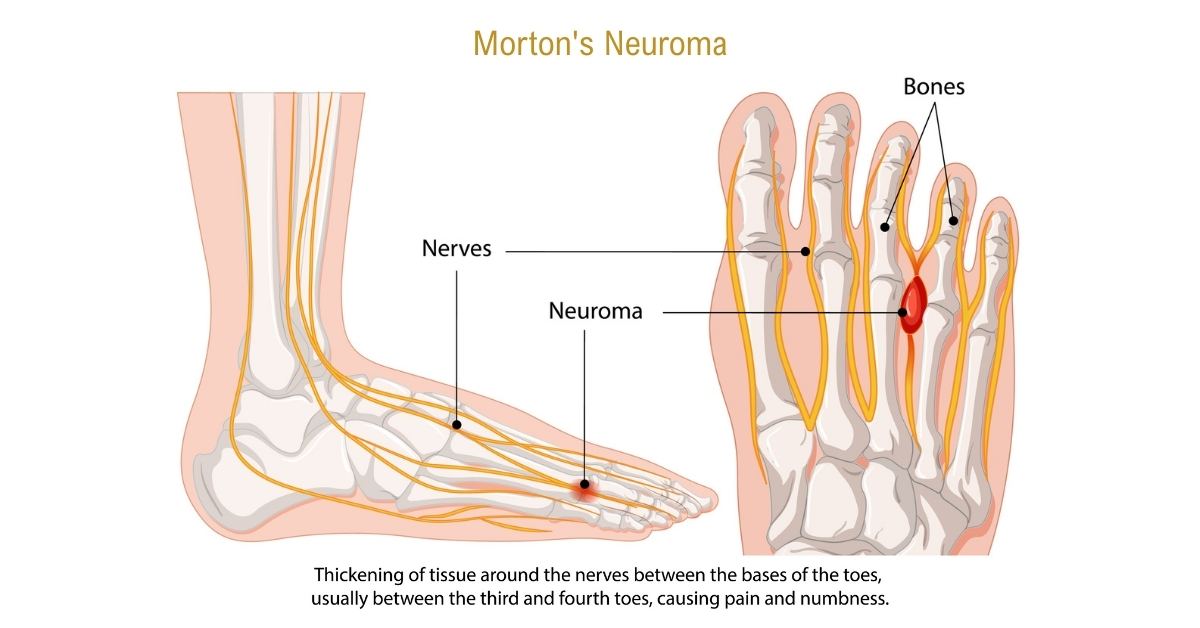
Morton’s neuroma is when you have inflammation on a nerve in your foot.
But don’t be fooled by the name ‘neuroma’.
That’s because while a neuroma is a benign soft tumor of your nerve endings.
Rather, a Morton’s neuroma is a swelling and thickening of your existing nerve tissue. It can get bigger or smaller on its own.
It most often occurs in the nerves that connect your 3rd and 4th toes to your foot, but you can develop them between your other toes as well.
It’s named after a Civil War surgeon, Dr. Morton, who first proposed a surgical approach to treat it.
If you have Morton’s neuroma, it’s important to see your podiatrist as soon as possible for treatment.
That’s because it can become more severe without treatment, leading to permanent nerve damage.
But what does Morton’s neuroma feel like?
What Does Morton’s Neuroma Feel Like?
There are a number of different types of foot pain.
How can you tell if what you’re feeling is Morton’s neuroma?
Morton’s neuroma most often feels like:
- Stepping on a small rock in your shoe
- Your sock is bunched up in your shoe
- Swelling between your toes
- Pain between your toes while standing or walking
- Pain that increases while on the balls of your feet, like when wearing high heels
- Tingling, burning, and numbness in your foot
These symptoms often get worse over time.
What was at first only a minor tingling or pain in your foot that recovers with rest could become something more chronic as the inflammation gets worse.
That’s why it’s important to isolate what’s contributing to your Morton’s neuroma, in order to stop irritating your nerves.
The symptoms of Morton’s neuroma can closely resemble those of bursitis in your feet.
However, a podiatric approach to foot bursitis will be very different than that for Morton’s neuroma.
But more on diagnosis later.
What Triggers Morton’s Neuroma?
Right now, there’s no simple answer to what triggers Morton’s neuroma.
Our best guess is that Morton’s neuroma is often caused by pressure on your toes, your nerves, and the balls of your feet.
Rarely, it can also be caused by an injury to your foot, often occurring during sports or trauma.
This means that there are activities that can increase your risk of developing it.
One example is wearing high heels, or shoes with a pointed toe.
This creates added pressure on your toes, nerves, and the balls of your feet as you move in them.
Another example is playing any sport that requires a lot of pressure on the balls of your feet.
Tennis, running, and other racquet sports all do this.
RELATED ARTICLE: 6 Simple Ways to Avoid Running Injuries
Finally, you’re at a higher risk of developing Morton’s neuroma if you work a physical job that requires you to be on your feet all day like a server in a restaurant or a construction worker.
You’re also at higher risk for Morton’s neuroma if you have:
- Flat feet (pes planus)
- Bunions
- Hammertoe
- High arches in your feet
How Can A Podiatrist Help Treat Morton’s Neuroma?
If you think you might have a Morton’s neuroma, consult with your doctor or a podiatrist as soon as possible.
This is to prevent your condition from getting worse and causing potential chronic pain or nerve damage.
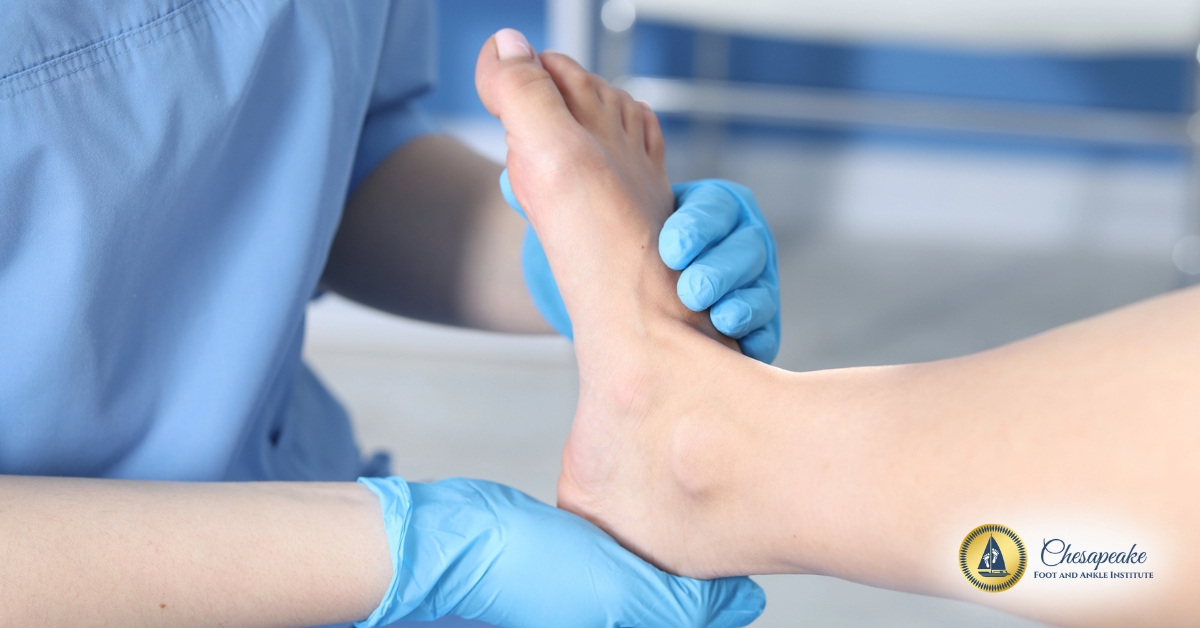
Your podiatrist will first conduct a thorough evaluation to understand exactly what’s causing your symptoms.
Often this will include a physical exam, along imaging tools like an x‑ray or ultrasound.
The physical exam may involve light pressure on the spaces between your toe bones, and you may be asked to stand, walk, or move.
Your podiatrist will also ask about your symptoms, and if any particular activities make them worse.
Typically, Morton’s neuroma can be diagnosed with symptoms and a physical exam.
An x‑ray won’t show a Morton’s neuroma.
But the point of ordering an x‑ray is so that it can rule out other conditions that cause similar symptoms, like a stress fracture or osteoarthritis in your feet.
After all, podiatric treatments for stress fractures are quite a bit different than that of Morton’s neuroma.
Depending on the circumstances, your podiatrist may also use an ultrasound to take pictures of your nerve for a clearer picture of your condition.
They may also recommend an electromyography, which is a test that measures the electrical activity of your nerves and muscles.
This is to rule out other nerve conditions that can mimic the signs of Morton’s neuroma.
Once you’ve been diagnosed with one, here’s what your podiatrist may recommend to help.
1. Orthotics
Starting with orthotics, your podiatrist may recommend shoe inserts that help to support your feet and keep your toes spaced out.
This is to help reduce pressure on your nerves.
There are also shoe pads that help to cushion the pads of your feet.
Or it may be recommended to change shoes all together, instead going for ones with a wide, deep toe box.
All of these non-invasive solutions work to reduce the pressure on your affected nerve.
2. Cold Therapies
If your symptoms are causing a lot of pain, then your podiatrist might recommend cold therapies to help reduce the inflammation of your nerve.
This could look like applying cold packs, or ice, to your foot in timed intervals.
Always remember to follow your podiatrist’s instructions on the duration of application, and not to put the ice directly on your skin.
Instead, wrap it in a towel first.
3. Medicinal Approaches
Medicinal approaches to reducing your pain often include non-steroidal anti-inflammatory drugs (NSAIDs).
These NSAIDs are designed to reduce your pain and swelling.
But remember, always check with your podiatrist and follow their recommendations for how long to take them for.
4. Corticosteroid Injections
Another approach to reduce your symptoms could be a corticosteroid injection directly into the affected area of your foot.
Corticosteroids are a type of prescription medication that reduces your inflammation and pain,
5. Minimally Invasive Surgery
Finally, you may require surgery to heal your Morton’s neuroma.
This is not that common, since many people often recover from the treatments previously described.
But if you’re not getting adequate relief from the less-invasive options, your podiatrist may recommend this.
There are three common surgical techniques that depend on your symptoms.
The most common one is a neurectomy, in which the affected nerve is partially removed by your surgeon.
Cryogenic neuroablation is another option your surgeon might use which involves using extreme cold to destroy some nerve cells on your affected foot.
The goal here is to reduce your nerve’s sensitivity and inflammation.
Or, your surgeon might recommend radio frequency ablation, which uses electric currents instead of cold to destroy your affected nerve.
This procedure prevents pain signals being sent from your affected nerve back to your brain.
Book Your Appointment With Our Podiatry Clinic Today
Morton’s neuroma can make everyday activities like walking, exercising, or even wearing certain shoes uncomfortable.
While the symptoms may start as mild tingling or irritation, they can gradually worsen if the underlying pressure on the nerve isn’t addressed.
The good news is that with the right diagnosis and treatment plan, most people are able to find lasting relief and return to their normal activities.
At our podiatry clinic in Vienna, VA, our podiatrists are experienced in diagnosing and treating Morton’s neuroma using a range of conservative and surgical options tailored to your needs.
Book your appointment with Chesapeake Foot and Ankle Institute today and take the first step toward relief from nerve pain in your feet.