
When your big toe starts to hurt, it can throw off your entire day.
Every step feels different — and suddenly, simple things like walking, exercising, or even putting on shoes become uncomfortable.
The tricky part?
Big toe pain isn’t always easy to self-diagnose.
Is it a bunion?
Arthritis?
Or something else entirely?
Here at Chesapeake Foot and Ankle Institute, we offer both non-surgical and surgical bunion treatment and foot and ankle arthritis treatment.
So we’ll take a closer look at the difference today.
Two of the most common causes of big toe pain are bunions (hallux valgus) and big toe arthritis (hallux rigidus) — and while they may seem similar, they’re actually very different conditions.
In this article, we’ll break down the key differences between bunions and hallux rigidus, how to recognize the symptoms of each, and when it’s time to see a podiatrist for an accurate diagnosis and personalized treatment plan.
What Is Big Toe Arthritis (Hallux Rigidus)?
Hallux rigidus is the clinical name for arthritis in your big toe.
It mainly affects your metatarsophalangeal (MTP) joint.
That’s a joint which can be found where the base of your big toe touches your foot.
Arthritis is the general name for a group of diseases that cause inflammation in and around your joints.
Osteoarthritis and rheumatoid arthritis are the two most common types, but there are actually more than a hundred types of arthritis.
What each type of arthritis has in common is pain and stiffness.
So, with hallux rigidus, you might notice that your big toe feels stiff, swollen, and painful.
The pain is usually often felt on top of your toe.
Depending on the severity of your condition, though, you may feel it deeper in your MTP joint.
There can sometimes be a visible sign, where you might notice a bump on the top of your MTP.
Hallux rigidus is a wear and tear arthritis, which means that most cases of it develop naturally over time through activities like walking.
That’s because your MTP joint experiences a force equal to twice your body weight with every step you take.
This wear and tear is focused on the cartilage in your joint, which is what cushions your bones in their sockets.
If you’re experiencing any of these symptoms, consider reaching out to a podiatrist for help.
RELATED ARTICLE: Hallux Rigidus Podiatry Care: Understanding Big Toe Arthritis And Treatment Options

What Is a Bunion (Hallux Valgus)?
A bunion is a specific type of bony bump on the inside of your foot that is a structural deformity and imbalance of the joint.
They often develop on the base of your big toe, on the MTP joint.
The bunion deformity leads to a prominent boney bump and becomes more noticeable as the deformity worsens and can push your big toe against your other toes.
This can create an angled appearance in your toes.
In most cases, bunions are easy to spot.
Other signs that you might have a bunion are if you experience pain, swelling, and discomfort while walking.
You may also have difficulty finding a comfortable pair of shoes.
Some people develop bunions develop due to genetics.
If it runs in your family, and you have a parent and grandparent with one, then there’s a strong chance you’ll could also develop one.
Otherwise, it is possible to develop a bunion if you have inflammatory conditions like rheumatoid arthritis.
They’re also more common in people who work on their feet all day.
Some people develop bunion deformities from the type of shoes they may wear: shoes that are too narrow in the forefoot, the wrong size shoes, high heels with narrow forefoot, etc.
This includes people who work in retail, or in hospitality.
If you think you have a bunion, you should seek the help of a podiatrist.
They can diagnose your symptoms and create a custom treatment plan designed to help, starting with the least invasive treatment.
Some examples of non-invasive treatments include custom orthotics, or shoe padding.
Depending on the level of your discomfort, they may also recommend anti-inflammatory and topical pain relievers.
If your bunion is causing you severe difficulties, then surgical intervention may be recommended.
Your podiatrist will always recommend the least invasive approach first.
RELATED ARTICLE: Is It Worth Fixing A Bunion?
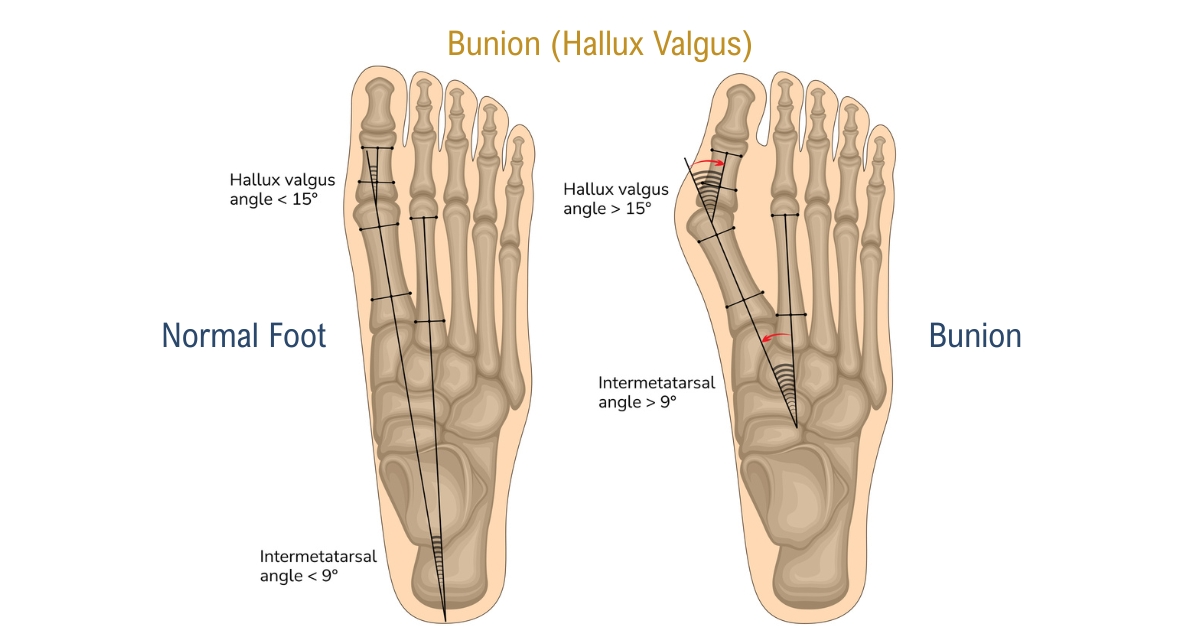
How To Tell The Difference Between Bunion vs. Arthritis Pain In Your Big Toe?
Now, after getting here, you might be wondering what the difference is between hallux rigidus and a bunion.
So, let’s go through some differences.
If you have hallux rigidus, you will notice pain on the top of your MTP joint.
On the other hand, bunion pain tends to occur on the side of the joint where the bone is protruding.
There is a visible difference as well, because you’ll see the bunion on the side of your foot.
Hallux rigidus does not create any external changes in your foot.
Your range of motion can vary between the two conditions too.
If you have hallux rigidus, your MTP joint will be stiff.
But if you have a bunion, the bump may limit your range of motion due to pressure, but your joint will still be flexible.
Finally, each condition progresses differently.
Arthritic progression will involve stiffness and pain, whereas bunions develop gradually with a noticeable shifting of your toe’s position.
Can You Have Hallux Rigidus And A Bunion At The Same Time?
Now, you might be wondering, is it possible to have both conditions?
The answer is yes, and having this combination can complicate your symptoms.
As a result, you may require a more comprehensive treatment plan.
But what’s more, a bunion can actually increase your risk of developing hallux rigidus.
This is because a bunion can alter your foot mechanics.
It can change the way you walk and use your feet, to compensate for the pain it causes.
This can increase the chances of you developing arthritis due to extra stress on the joint.

What To Do If You Have Big Toe Pain?
If your big toe is giving you some trouble, book an appointment with us at the Chesapeake Foot and Ankle Institute.
We can provide an accurate diagnosis of your pain.
This will include a physical exam and medical history, and may also include imaging like X‑rays to get the full picture.
Then, once arriving at a diagnosis, your podiatrist will create a custom treatment plan designed to reduce your symptoms, improve your mobility and preserve your joint function.
Usually, they will start with non-invasive options and move to more invasive if they are not helping.
Non-invasive treatment options include:
- Wide toe box shoes
- Toe spacers
- Custom orthotics
- Hot and cold treatment
- Topical pain killers
- Corticosteroids
Invasive treatments are typically surgical options and a patient may be a candidate for minimally invasive bunion surgery or minimally invasive hallux rigidus surgery.
If you have hallux rigidus, surgery prioritizes joint replacement, bone shaving, or joint fusion.
If you have a bunion, surgery will prioritize realigning bones and soft tissues.
At the Chesapeake Foot and Ankle Institute, our podiatry team is trained to perform these surgeries.
They’re considered outpatient surgeries, which means you’ll be able to go home right after.
Your podiatrist will take the time to help you understand your options, so you can make the right decision for you.
Book Your Appointment With Our Podiatry Clinic Today
Big toe pain can feel frustrating — especially when you’re not sure what’s causing it.
While bunions and hallux rigidus both affect the same joint, they require different approaches to treatment.
Getting an accurate diagnosis is the first and most important step toward lasting relief.
At Chesapeake Foot and Ankle Institute, our podiatry team will carefully evaluate your symptoms, confirm whether you’re dealing with a bunion, arthritis, or both, and create a personalized treatment plan designed around your lifestyle and goals.
Book your appointment with Chesapeake Foot and Ankle Institute today and take the first step toward getting back to comfortable, pain-free movement.