

Ingrown Toenails
Evaluation and care for ingrown toenails in children and adults at our Tysons Corner podiatry clinic.
Understanding Ingrown Toenails
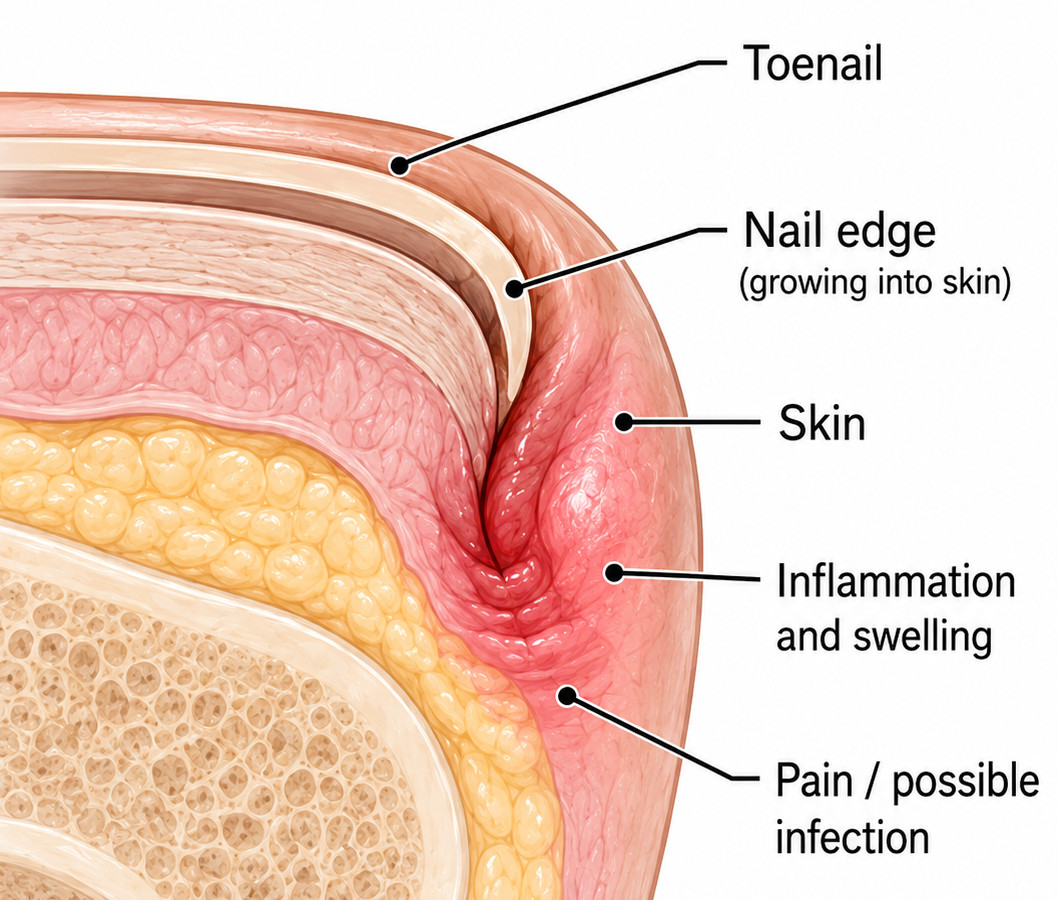
An ingrown toenail occurs when the edge or corner of the toenail grows into the surrounding skin. This can cause pain, redness, swelling, tenderness, and sometimes infection if the area becomes irritated or left untreated.
Ingrown toenails most commonly affect the big toe, but they can develop on other toes as well. They may be caused by nail shape, trimming habits, footwear pressure, injury, or repeated irritation from sports and daily activity.
Ingrown toenails are just one of many foot and ankle conditions we evaluate and manage. You can explore the full range of foot and ankle conditions we treat to learn more.

Causes
What Causes Ingrown Toenails?
Ingrown toenails may develop due to one or more contributing factors, including:
- Trimming toenails too short or rounding the edges
- Wearing tight shoes or socks that put pressure on the toes
- Injury or trauma to the toenail
- Naturally curved or thickened toenails
- Repeated pressure from sports or physical activity
- Poor foot hygiene or excessive moisture

Who Is Affected
Who Can Be Affected by Ingrown Toenails
Ingrown toenails can affect people of all ages, including:
- Children and teenagers
- Athletes and active individuals
- People who wear tight shoes or cleats
- Individuals who trim their toenails too short
- Patients with naturally curved or thickened toenails
- Adults who experience recurring toenail irritation or infection
Diagnosis
How Ingrown Toenails Are Diagnosed
Diagnosis typically begins with a physical examination of the affected toe and a discussion of your symptoms, nail care habits, footwear, activity level, and medical history. Your podiatrist will look for signs of pain, swelling, redness, drainage, or infection.
An accurate evaluation can help determine the severity of the ingrown toenail and whether conservative care or an in-office procedure may be appropriate.

Treatment Options
Treatment Options for Ingrown Toenails
Treatment for an ingrown toenail depends on the severity of the irritation, whether infection is present, and whether the problem is recurring. Our approach may include a range of conservative and in-office treatment options, which you can learn more about on our podiatry services page.
Conservative Care Options
- Footwear guidance to reduce pressure on the toe
- Proper nail trimming recommendations
- Warm soaks or at-home care guidance when appropriate
- Monitoring for signs of infection
- Activity or shoe modifications for athletes and active patients
Advanced or Procedural Options (When Needed)
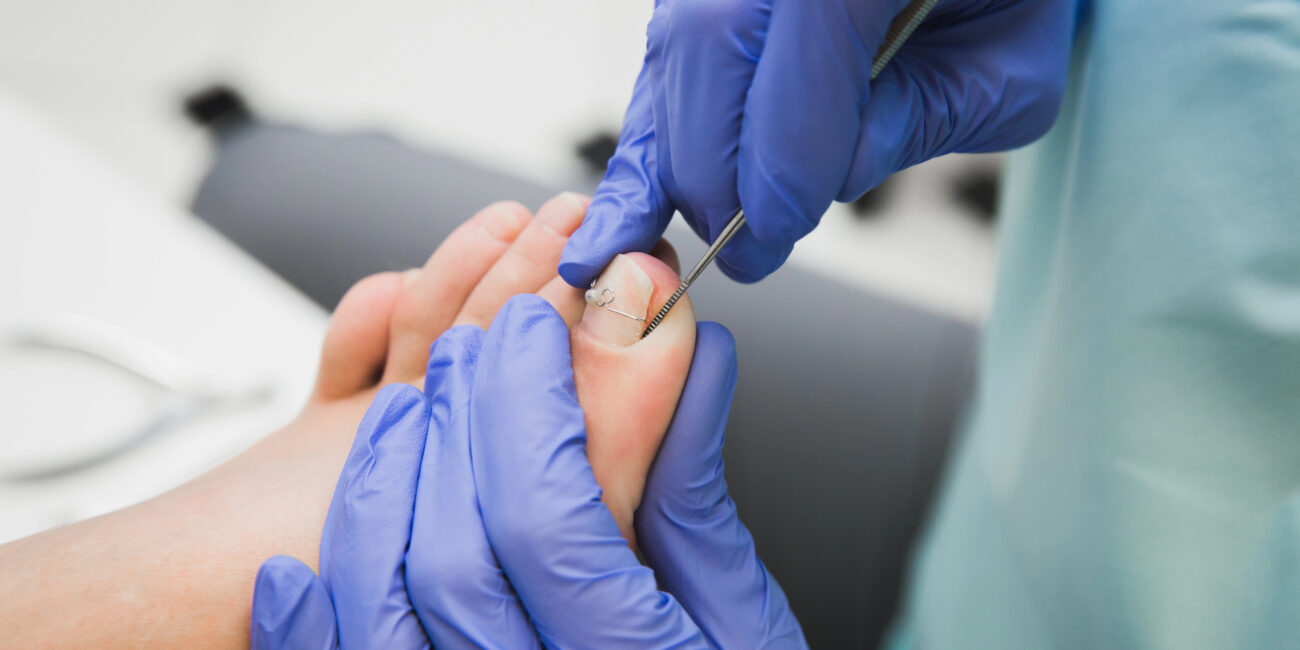
- Removal of the ingrown portion of the nail
- Treatment for infection when present
- Minor in-office procedures for recurring ingrown toenails
- Guidance to try to reduce the risk of recurrence
Local Care You Can Trust
Care at Our Tysons Corner Clinic
Patients from across Northern Virginia visit our Tysons Corner clinic for evaluation and care of Ingrown Toenails.
Our podiatrists take the time to understand each patient’s symptoms and goals and try to guide care decisions based on individual needs and circumstances.
Our clinic is located within Tysons Professional Center in Vienna, Virginia.

Our Learning Library
Learn More About Foot & Ankle Conditions
For additional education and guidance, explore the related articles below.
Frequently Asked Questions
Common Questions About Ingrown Toenails
Below are answers to common questions patients have about ingrown toenails and when to consider seeing a podiatrist.
What causes ingrown toenails?
Ingrown toenails can be caused by trimming nails too short, rounding the nail edges, wearing tight shoes, toe injuries, naturally curved nails, or repeated pressure from sports and activity.
Can an ingrown toenail go away on its own?
Mild irritation may improve with proper nail care, footwear changes, and careful monitoring. However, if pain, swelling, redness, drainage, or infection develops, professional evaluation may be needed.
When should I see a podiatrist for an ingrown toenail?
You may want to see a podiatrist if the ingrown toenail is painful, recurring, infected, or making it difficult to wear shoes, walk, or participate in normal activities.
Are ingrown toenails common in children?
Yes. Ingrown toenails can affect children and teenagers, especially if they wear tight shoes, play sports, trim their nails too short, or have naturally curved toenails.
What happens if an ingrown toenail is left untreated?
An untreated ingrown toenail may become more painful and can sometimes lead to infection. Early care can help relieve discomfort and reduce the risk of the problem becoming worse or recurring.
Will I need a procedure for an ingrown toenail?
Not always. Some ingrown toenails can be managed with conservative care, while more painful, infected, or recurring cases may benefit from a minor in-office procedure to remove the ingrown portion of the nail.
Get Help for Ingrown Toenails
If you or your child are experiencing pain, swelling, or irritation from an ingrown toenail, our podiatry team is here to help.
We’ll take the time to evaluate your concerns and try to recommend appropriate care options.
Book your appointment and take the first step toward relief.